Want your marketing strategy to be credible? SWOT analysis is the fundamental element that will make the concept you come up with succeed. Find out how to prepare it step by step!
Never heard of SWOT analysis? Don't worry, it's not as difficult as it might seem. And although the name sounds like a long, complicated process created for qualified specialists, in practice it isn't at all. The only skill you need is common-sense objectivity.
1. What is SWOT analysis?
What is SWOT analysis?
SWOT is an acronym for four English words:
Strengths - Strengths
Weaknesses - Weaknesses
Opportunities - Opportunities
Threats - Threats
2. How to do a SWOT analysis step by step
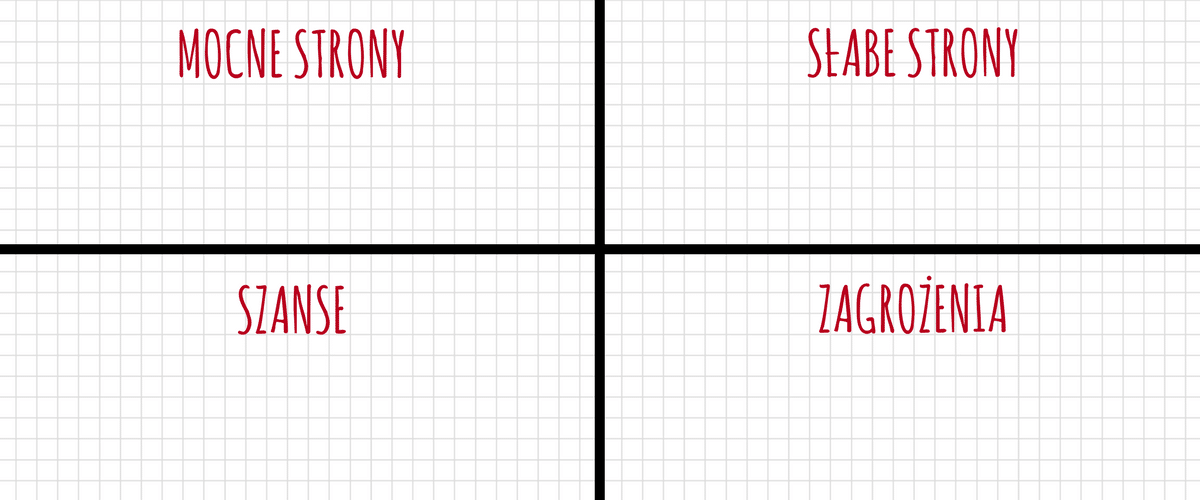
- Take a piece of paper and something to write with.
- Divide the page into four equal parts.
- Title each column with one of the four terms that make up the SWOT acronym (i.e. strengths, weaknesses, opportunities, threats).
- Think about your company's position and fill in the table.
3. What should you pay attention to?
Strengths
Think about what assets your company may have. Maybe it offers something that isn't on the market yet, or its price is particularly attractive? This is one of the more important parts of the analysis, because after all, to leave the competition behind, your business plan must stand out with something unique. Create a list of positives and rank them by their importance for brand development.
Weaknesses
The next step works on similar principles to the example above. This time, however, try to gather a substantial list of flaws that will be successively eliminated in the further process. One problem may be, for example, a lack of business experience or low brand recognition. Focus, and then rank them by degree of severity.
Opportunities
After all, there is no situation without a way out. There are always several solutions a company can use to remove the obstacles standing in the way of success. In this case, it's worth thinking not only about the present but also about the future. Emerging market trends, and even crisis situations that you can turn to your advantage, are your opportunities. Keep your eyes open, observe everything around you, seize opportunities, and control…
Threats
There are as many examples of complications in business as there are industries. Nevertheless, regardless of the type of business, every unresolved problem brings a company closer to failure. The most common threats are those resulting from competitors' activities, as well as from changing legal regulations. Human behavior and habits also have a significant impact, such as changing mentality, susceptibility to trends, and consequently abandoning certain technological solutions. These are just a few of the vast list of examples of business threats. Analyze the market related to your business and list potential problems. Ranked by hierarchy, threats are the last element of the set needed to conduct a thorough analysis.
4. Cross the factors
Cross the factors
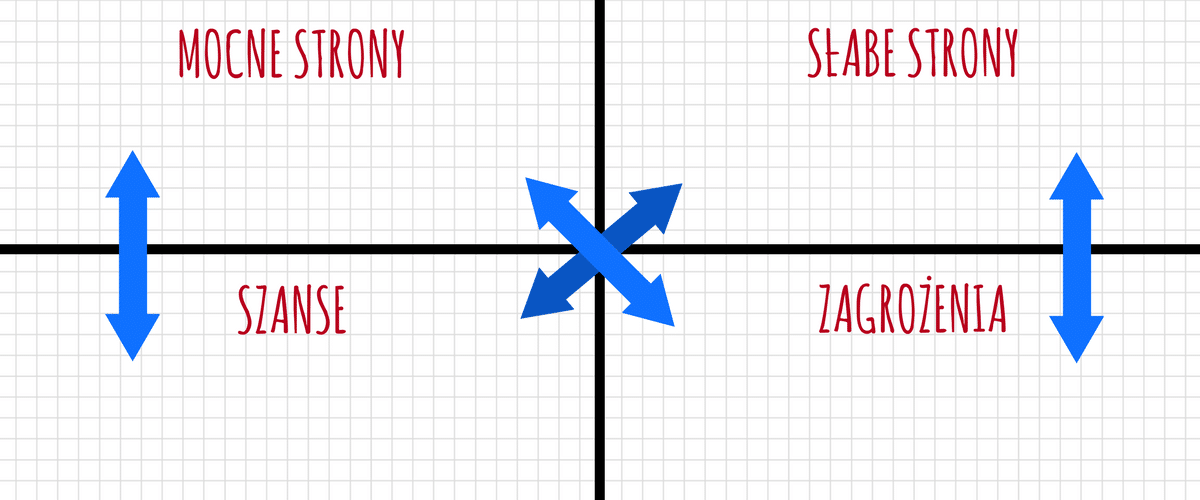
To obtain reliable results from a SWOT analysis, you need to cross the factors identified above. Why? Because together they form a complete whole. Their interaction provides specific answers to questions, precise solutions needed for the proper development of every marketing activity. Confront with each other:
1) Strengths / opportunities